The Sustainability Plan is a document that defines objectives, actions and measures that FBK intends to take to further integrate environmental, social and governance sustainability into its activities. It is a tool to guide and improve ongoing activities towards ESG principles.
The Plan is prepared within the implementation period of the FBK Mandate Plan and follows its timeline: defining objectives and actions to be applied from 2025 to 2027.
FBK embraces its commitment to the principles of sustainability which are reflected in two main trajectories:
- An outward trajectory, linked to the impact that the Foundation brings to sustainability through the results of its research and technological innovation. In this direction, the development of technical solutions, knowledge and skills that have a positive impact on society, is FBK’s true strength in responding to the challenges of the present.
- An internal trajectory of action, aimed at perfecting the processes and initiatives that guarantee sustainability in the use of large infrastructures and in the organisation of activities.
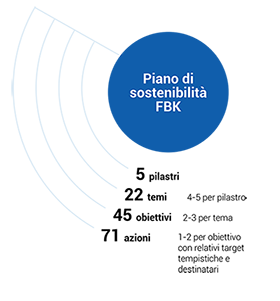
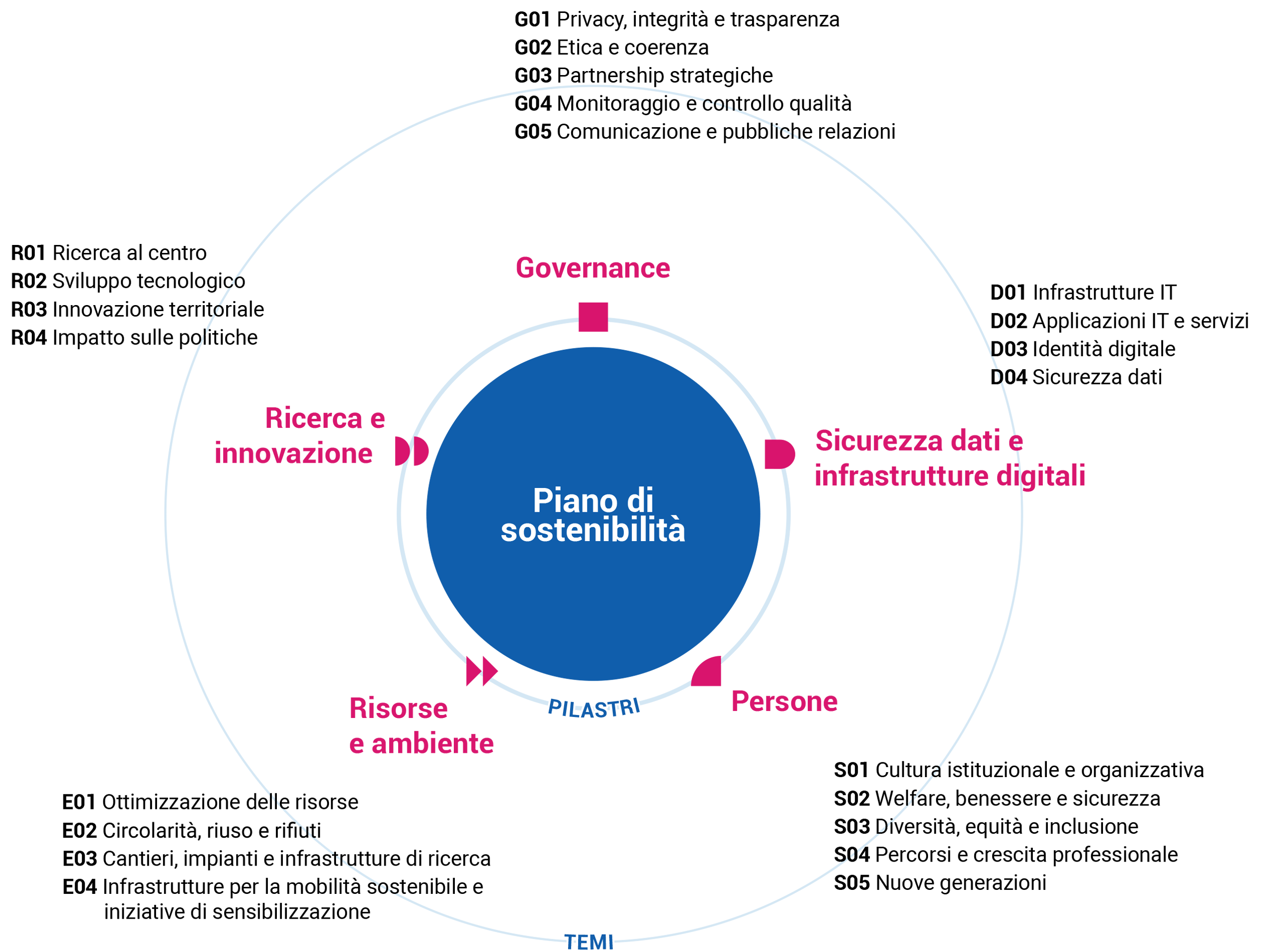
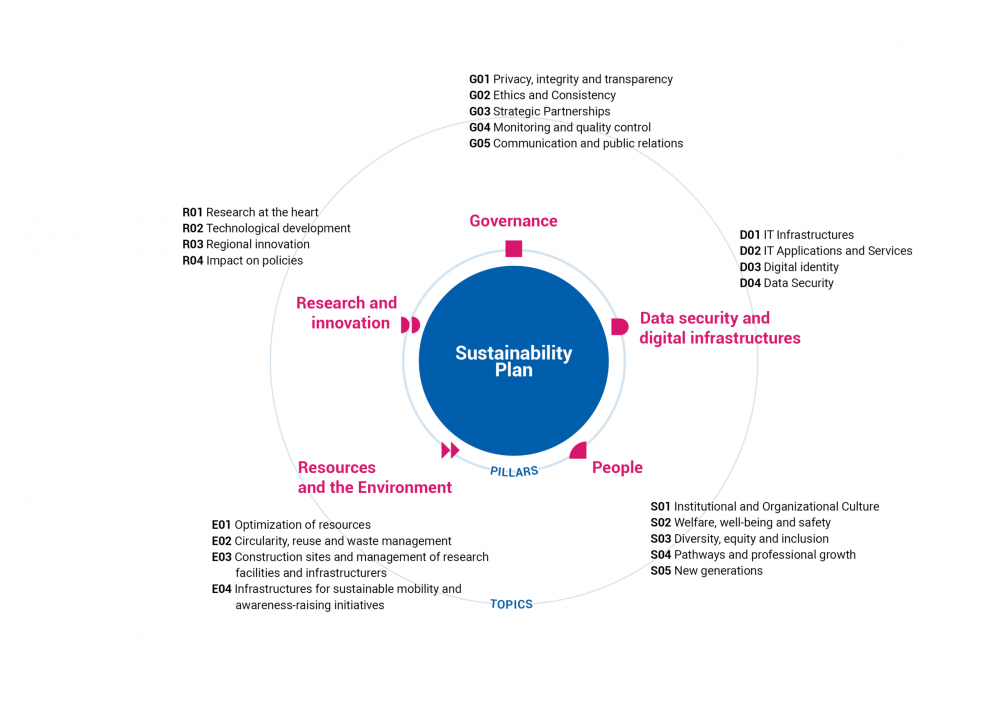
The structure of the Sustainability Plan is developed around 5 pivotal pillars: environmental (E), social (S) and governance (G) - for compliance with the ESG elements - together with research and innovation (R) and data security and digital infrastructure (D) - two further pillars, that are key to FBK and enablers of all-round sustainability.
As structuring elements of the Plan as a whole, each pillar is divided into four or five themes, illustrated below.
These themes are translated into specific objectives and concrete actions to be implemented during the three-year period 2025–2027. Each action is linked to measurable indicators for effective monitoring, clearly defined targets, timelines, ensuring transparent communication of progress. Within the Foundation’s internal processes, each action is also assigned to a responsible person who is accountable for its implementation.
Sustainability Plan for FBK
The Sustainability Plan is a document that defines objectives, actions and measures that FBK intends to take to further integrate environmental, social and governance sustainability into its activities. It is a tool to guide and improve ongoing activities towards ESG principles.
The Plan is prepared within the implementation period of the FBK Mandate Plan and follows its timeline: defining objectives and actions to be applied from 2025 to 2027.
FBK embraces its commitment to the principles of sustainability which are reflected in two main trajectories
How the Plan is structured:
The structure of the Sustainability Plan is developed around 5 pivotal pillars: environmental (E), social (S) and governance (G) – for compliance with the ESG elements – together with research and innovation (R) and data security and digital infrastructure (D) – two further pillars, that are key to FBK and enablers of all-round sustainability.
As structuring elements of the Plan as a whole, each pillar is divided into four or five themes, illustrated above.
These themes are translated into 45 specific objectives and concrete 71 actions to be implemented during the three-year period 2025–2027. Each action is linked to measurable indicators for effective monitoring, clearly defined targets, timelines, ensuring transparent communication of progress. Within the Foundation’s internal processes, each action is also assigned to a responsible person who is accountable for its implementation.45
Sustainability Governance
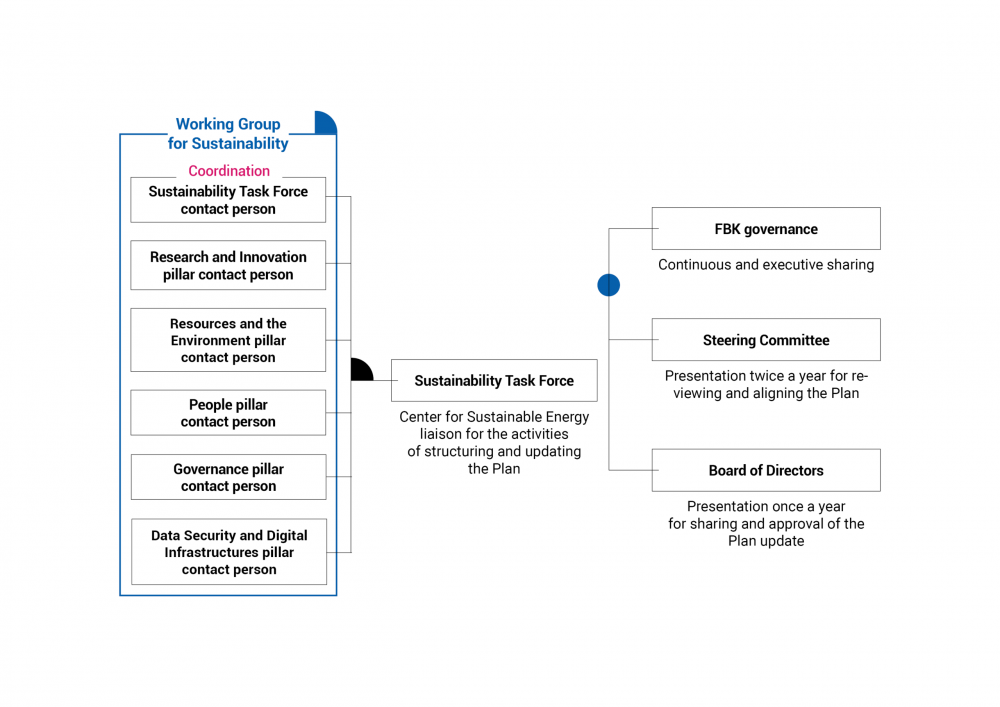
Developing forward-looking, effective and cohesive sustainability policies within the Foundation requires a “sustainability governance”, i.e. a discussion group within FBK to guide the definition of a comprehensive and synergetic programme capable of ensuring the consistency and coherence of the actions to be implemented. When drafting the Plan, this governance was proposed as described in the figure below, and it will work to enable priorities to be identified and resources to be directed towards sustainability issues.